
TAMInnov8 / The formulation workbench
Custom Lubricant
Formulation
Services — UAE
Every formulation starts with an application. TAMInnov8 connects your operating requirements with formulation research, ingredient considerations, and a clearly defined evaluation plan.
Shape Your Formulation BriefFrom ingredients to formulation
01 / FORMULATION REACTORStart with the purpose
Formulation starts with your application.
The intended application, operating temperatures, loads, contact materials, and service conditions help define which properties require attention.
Base-fluid selection, additive functions, compatibility, and production considerations are connected decisions. TAMInnov8 helps frame the development work, evaluation needs, and next steps.
The development approach
Three areas behind
every formulation.
A useful development brief connects the ingredients, their intended functions, and the evidence needed to evaluate them.
Base-fluid selection
The base-fluid discussion starts with the intended use, operating environment, and target characteristics. Viscosity behaviour, compatibility, and practical constraints help shape the direction.
Identify what is already fixed and where alternatives can be explored, keeping ingredient decisions connected to application needs.
Additive considerations
Additive functions may relate to protection, cleanliness, stability, or viscosity behaviour. The relevant priorities depend on the product and its intended operating conditions.
Ingredient interactions and compatibility matter. Selecting components individually does not establish the performance of the finished formulation.
Testing and review
Define the questions an evaluation should answer before selecting its scope. Relevant sample information and agreed conditions make comparisons more useful.
Review findings against the original brief. Further work may be needed before making claims, finalising specifications, or progressing to production.
Application-led thinking
Different applications.
Different requirements.
Start with the conditions the lubricant must encounter. Formulation suitability is considered project by project.
01 / Automotive
Movement.
Temperature.
Protection.
Discuss the intended engine or driveline application, relevant specifications, viscosity requirements, and service conditions. Product claims need appropriate supporting evidence.
Start an automotive brief02 / Industrial
Duty.
Load.
Consistency.
Connect the formulation discussion to equipment demands, operating cycles, maintenance needs, and practical constraints, rather than considering the lubricant grade alone.
Start an industrial brief03 / Marine
Service.
Conditions.
Compatibility.
Identify the intended equipment, service profile, and applicable specifications. A clear brief helps connect formulation questions with the required evaluation and documentation.
Start a marine brief04 / Hydraulic
Flow.
Response.
System needs.
Discuss the operating temperature range, expected fluid behaviour, system requirements, and material compatibility before defining the formulation priorities.
Start a hydraulic briefFrom brief to bench
Research supported
by laboratory work.
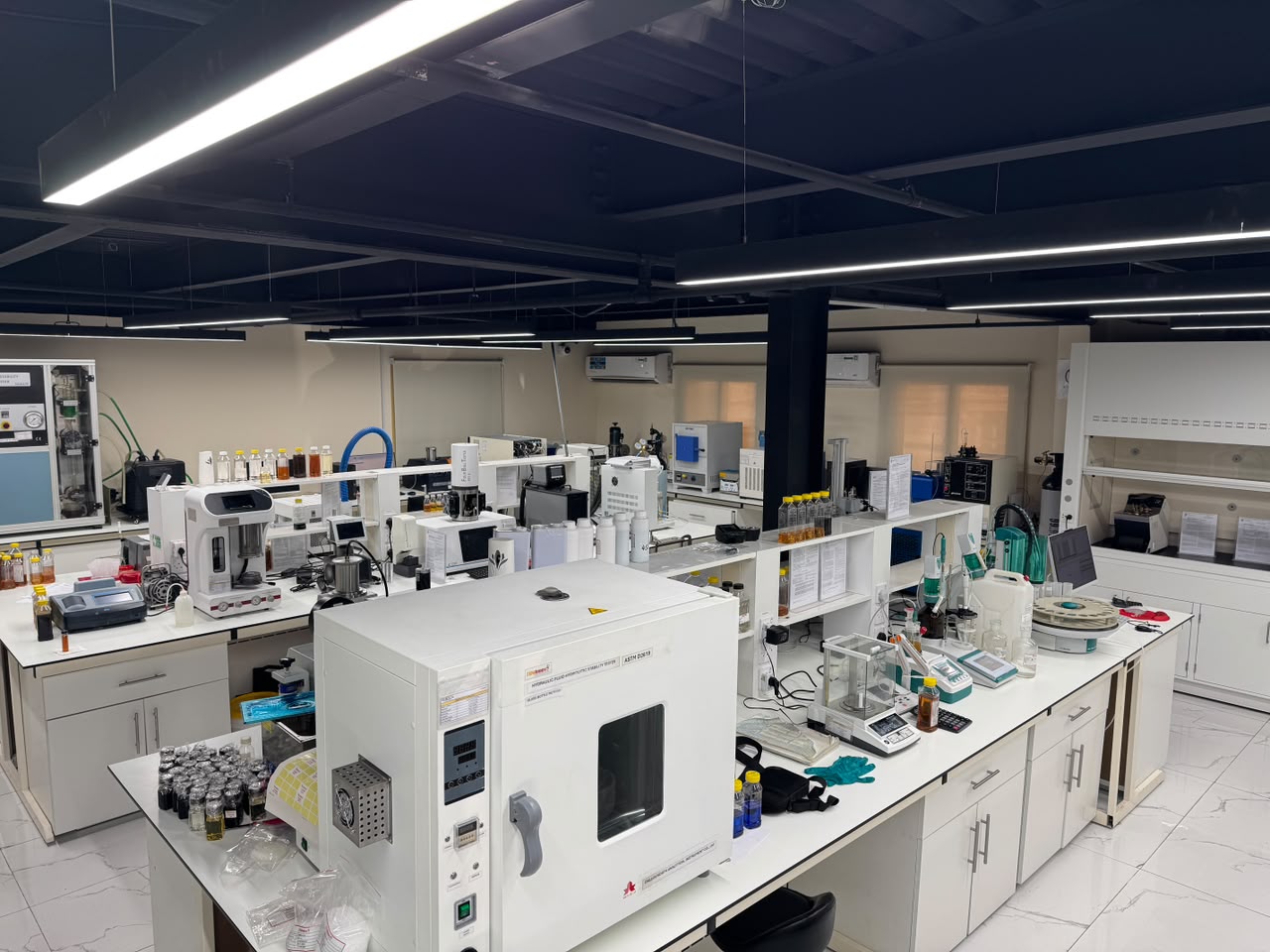
Formulation development is a learning process. Initial requirements, research, and observations help refine the direction, connecting the project brief with samples and findings.
Available methods, sample requirements, and evaluation scope are confirmed for each project. Results are reviewed in the context of the intended application and agreed requirements.
Prepare the first conversation
Create your
formulation brief.
Choose your application and discussion topics. Generate a short enquiry outline to copy and include when contacting our team.
Before we begin
Formulation
questions answered.
What should I include in a formulation enquiry?
Start with the intended application, operating conditions, target characteristics, and relevant specifications. Tell us whether you are developing a new product or reviewing an existing formulation. Our team can then identify any additional information needed.
Can I discuss an existing lubricant formulation?
Yes. Describe the issue, your observations, and the desired outcome. The scope of the review and the information required will be agreed during the initial discussion.
Does formulation development guarantee an approval?
No. A development brief, laboratory findings, and a formal approval serve different purposes. Approval requirements depend on the product, market, supporting evidence, and relevant external processes.
How long will the project take?
Timing depends on the brief, available information, sample requirements, evaluation scope, and any refinement needed. Project milestones can be discussed once the scope is understood.
Can this brief builder calculate my blend?
No. It organises the topics for your enquiry. It does not select ingredients, calculate treatment rates, predict performance, or replace technical assessment.
Continue exploring our expertise